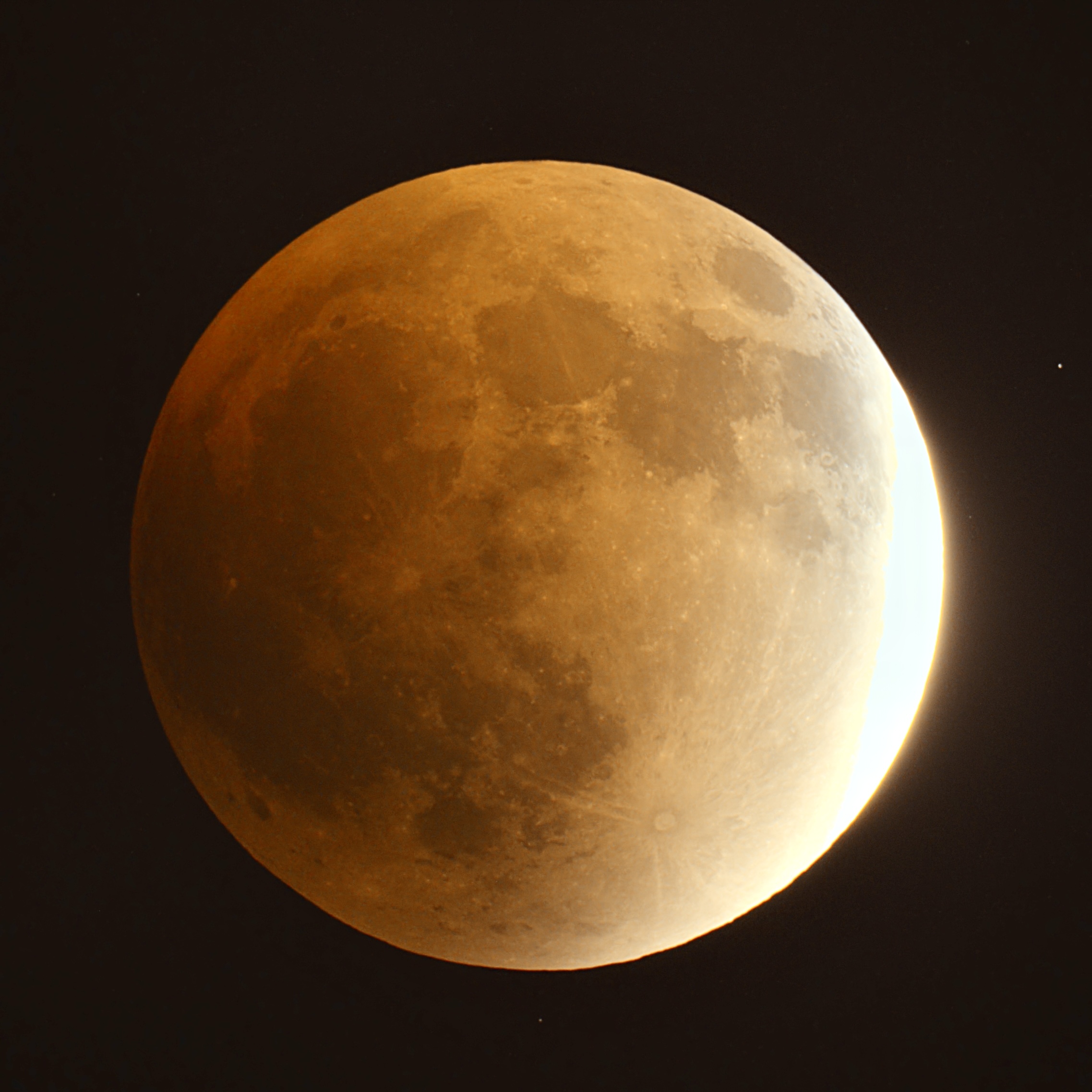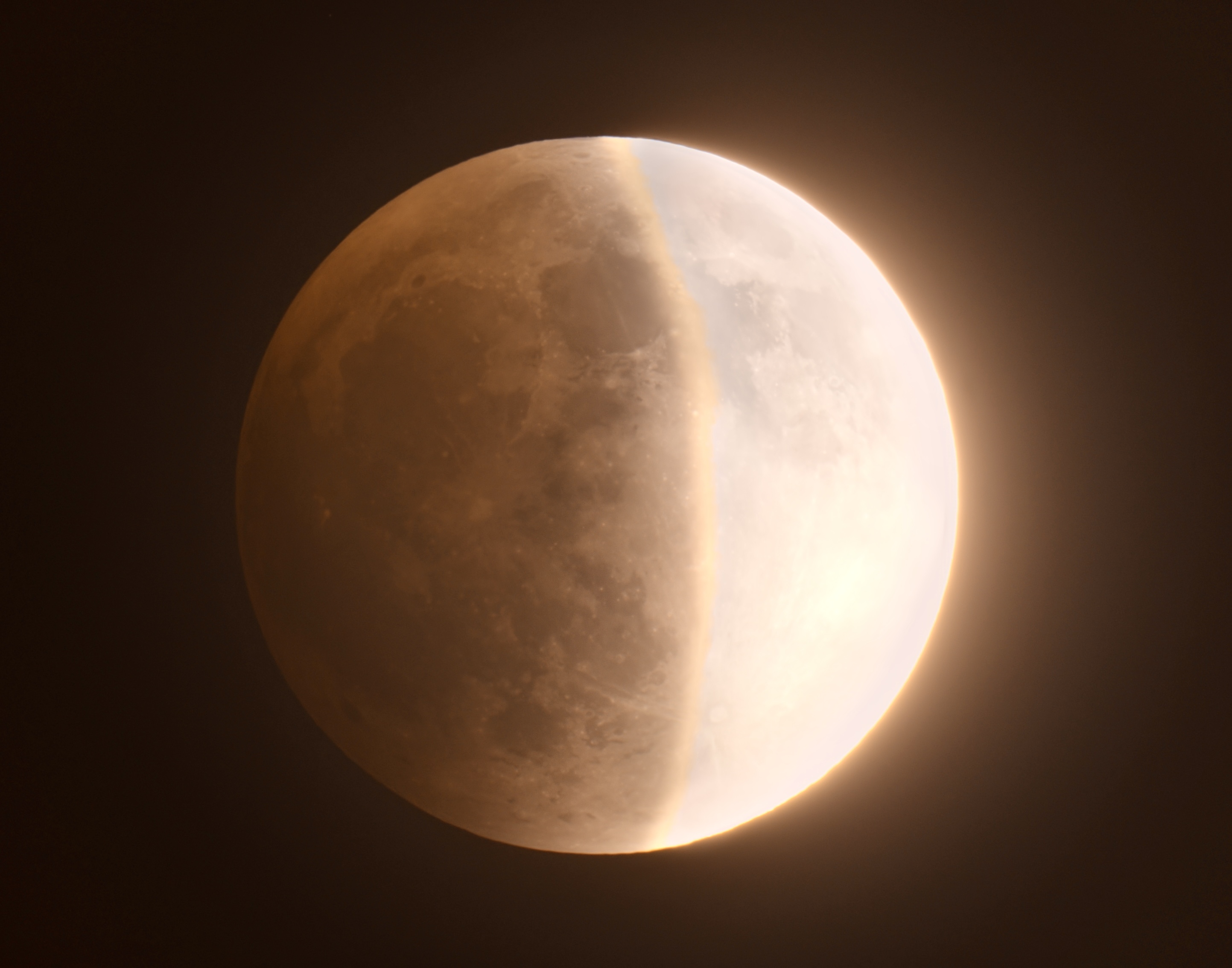
The first image shows the partial phase: sunlight is refracted through Earth’s atmosphere, forming a thin glowing rim along the terminator. This boundary marks the transition from the Moon being directly in Earth’s shadow to the red, scattered light that filters through the atmospheric shell.
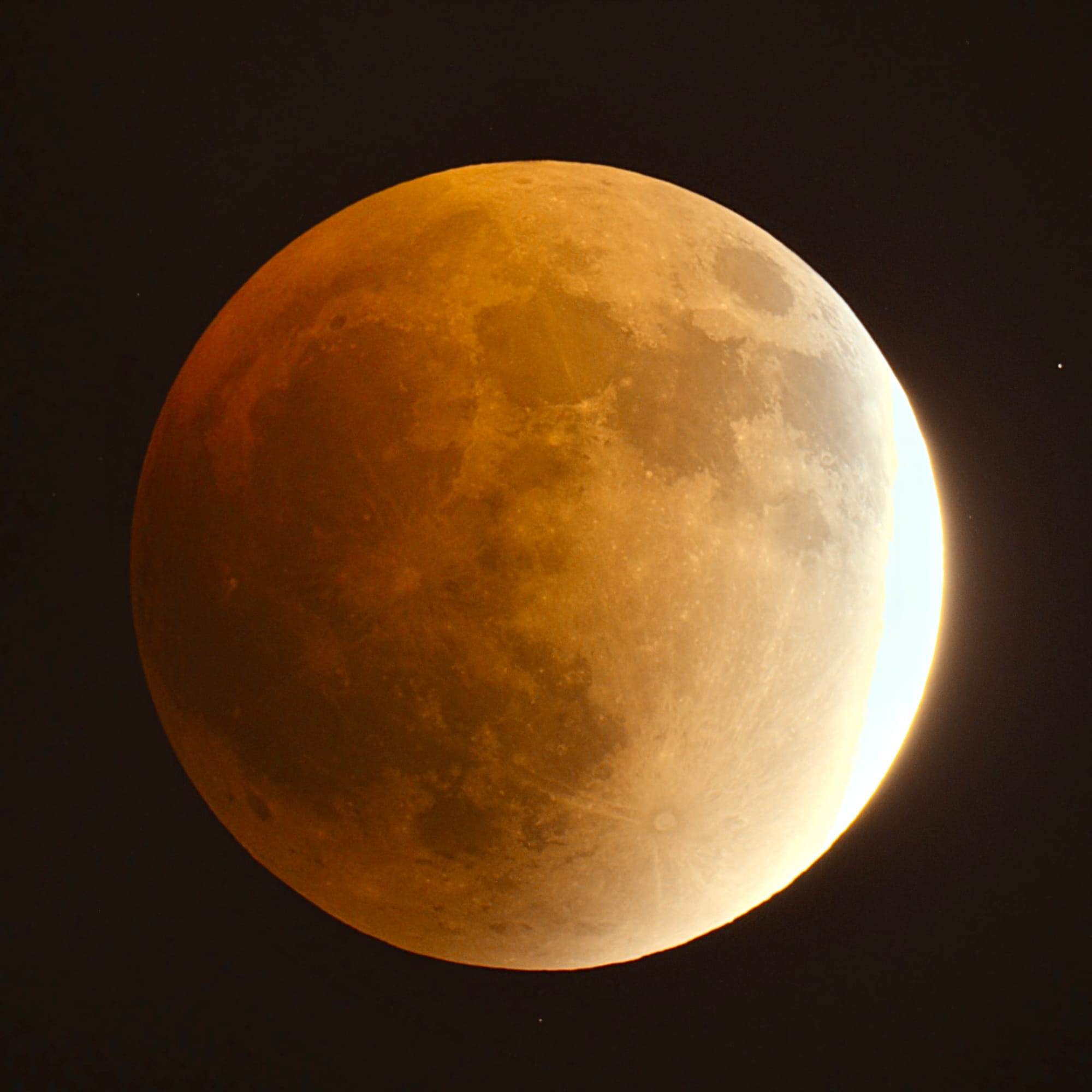
The second phase is totality. The Moon is fully immersed in Earth’s shadow and takes on a reddish hue — the result of short wavelengths being filtered out while longer ones pass through the atmosphere. The same mechanism is responsible for the deep red color of sunsets on Earth.
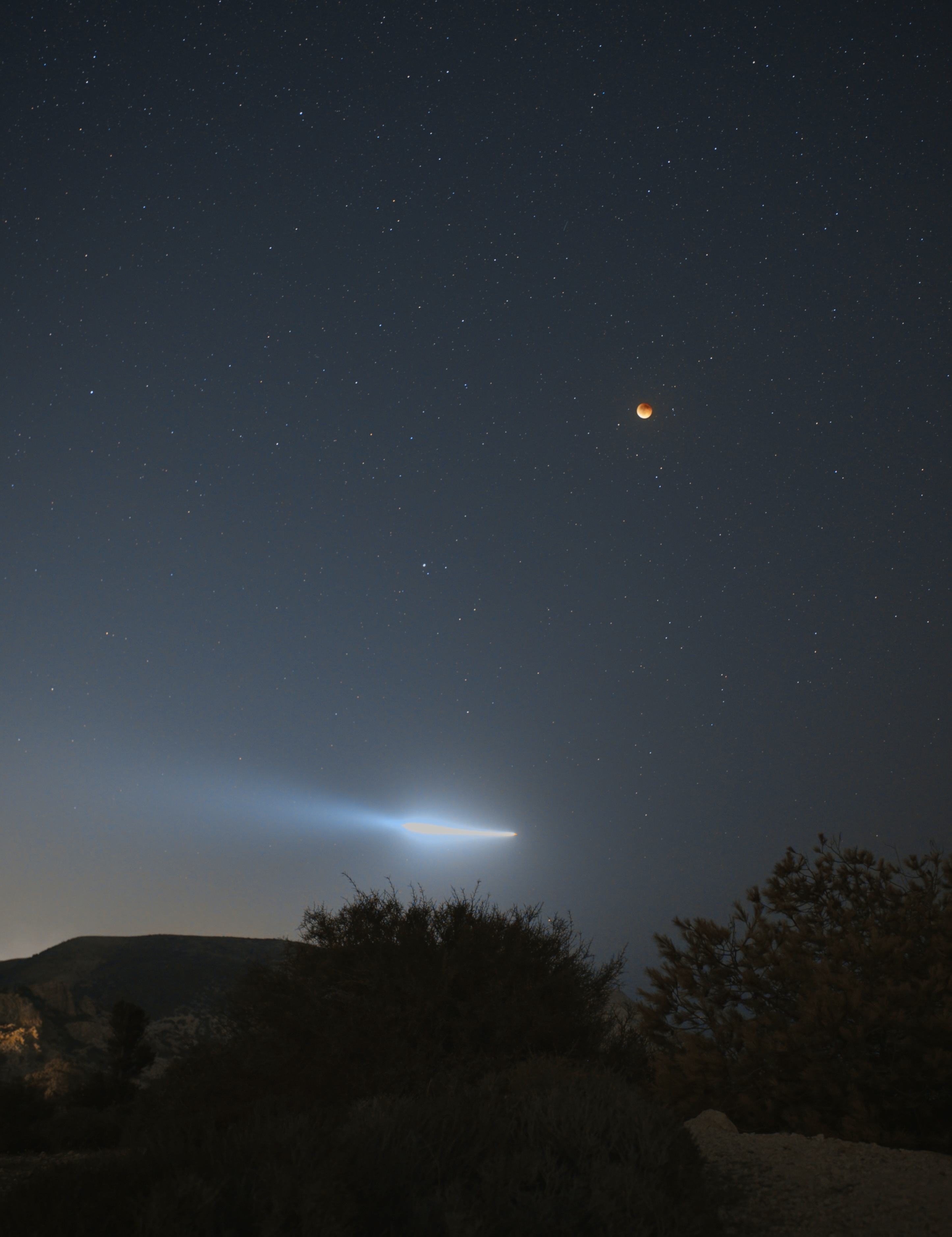
In the third frame, an aircraft on approach to Paphos International Airport passes beneath the eclipsed Moon.
| Camera | Nikon Z6 II |
| Optics | Celestron NexStar 6SE |
| Mount | UMi 17S |
| ISO | 2000 |
| F-ratio | f/6.3 |
| Exposure | 20 × 3 s |
| Total Integration | 1.0 min |
| Processing | Siril, GraXpert, GIMP |
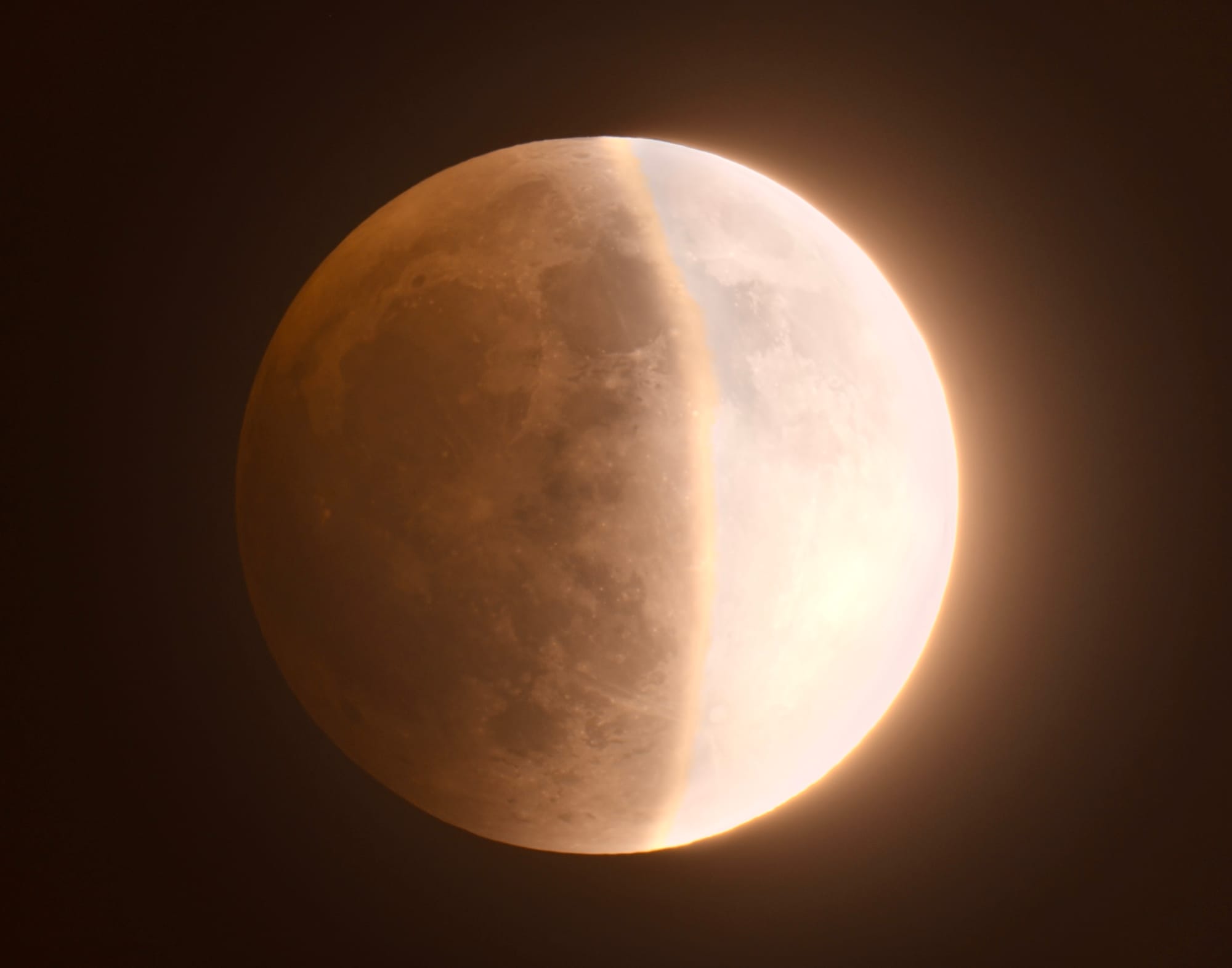
| Camera | Nikon Z6 II |
| Optics | Celestron NexStar 6SE |
| Mount | UMi 17S |
| ISO | 1000 |
| F-ratio | f/6.3 |
| Exposure | 20 × 1.6 s |
| Total Integration | 32 s |
| Processing | Siril, GraXpert, GIMP |
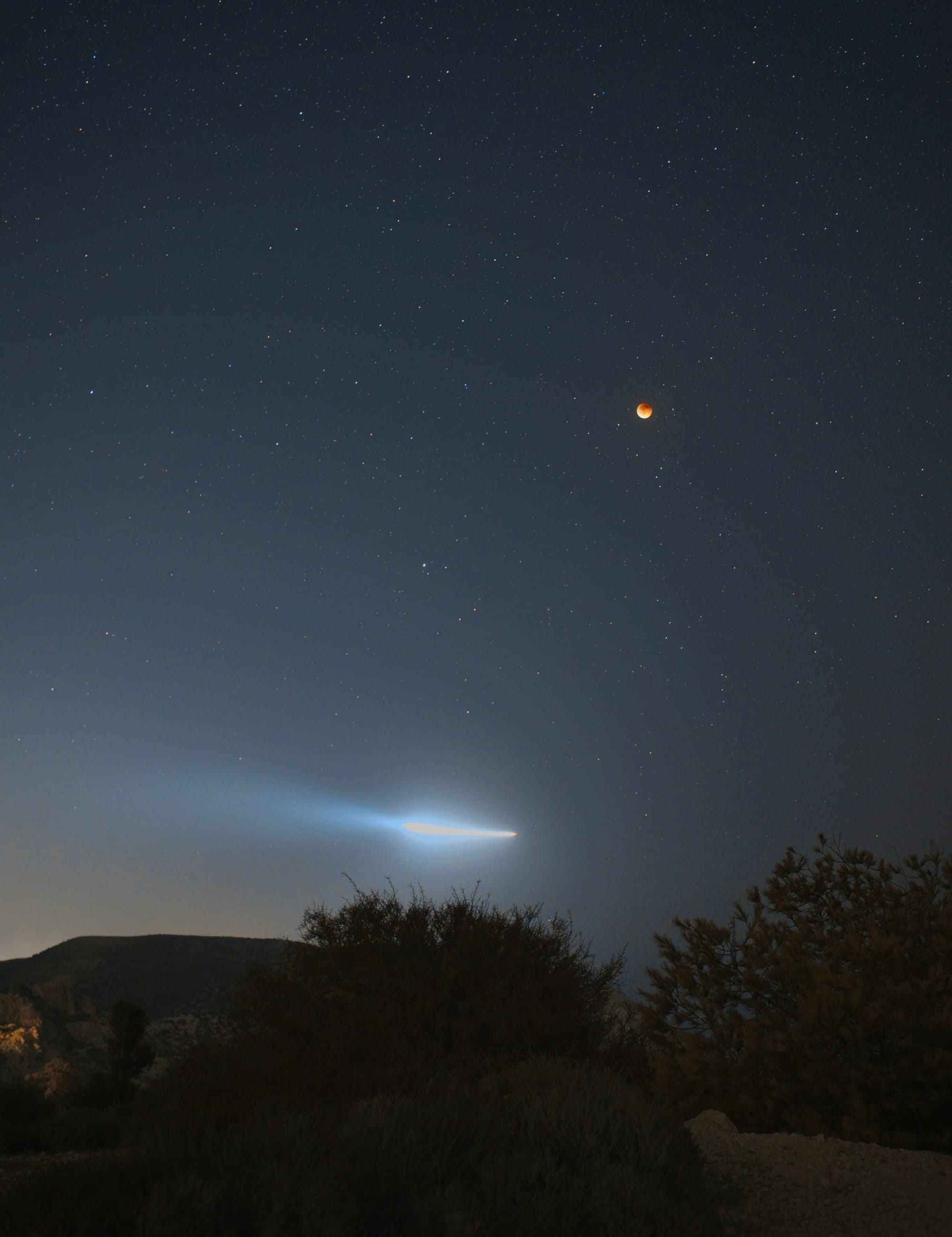
| Camera | Nikon Z6 II |
| Optics | Nikkor Z 20mm f/1.8 S |
| Mount | UMi 17S |
| ISO | 6400 |
| F-ratio | f/2.2 |
| Exposure | 5 × 10 s |
| Total Integration | 50 s |
| Processing | Siril, GraXpert, GIMP |