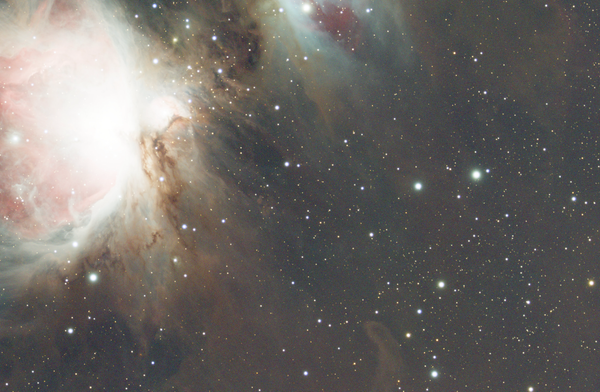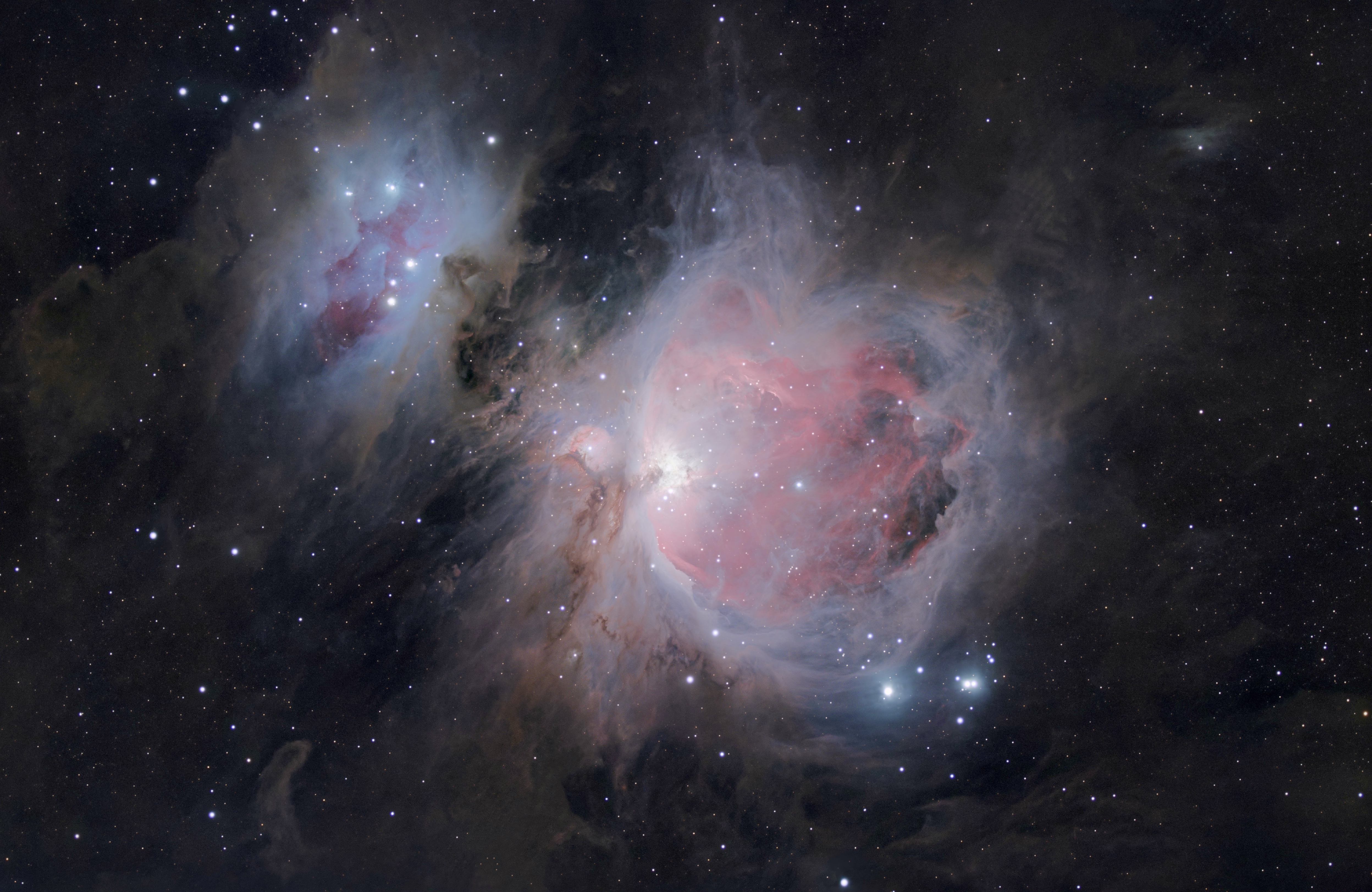
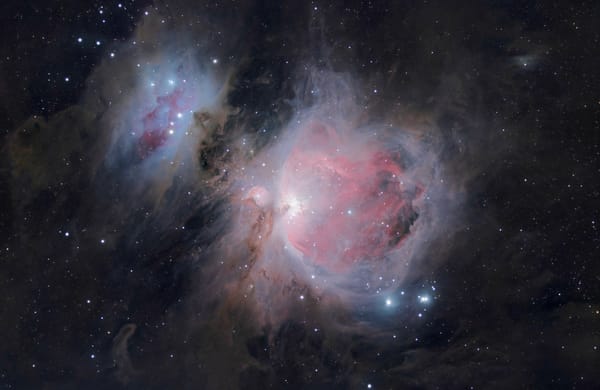
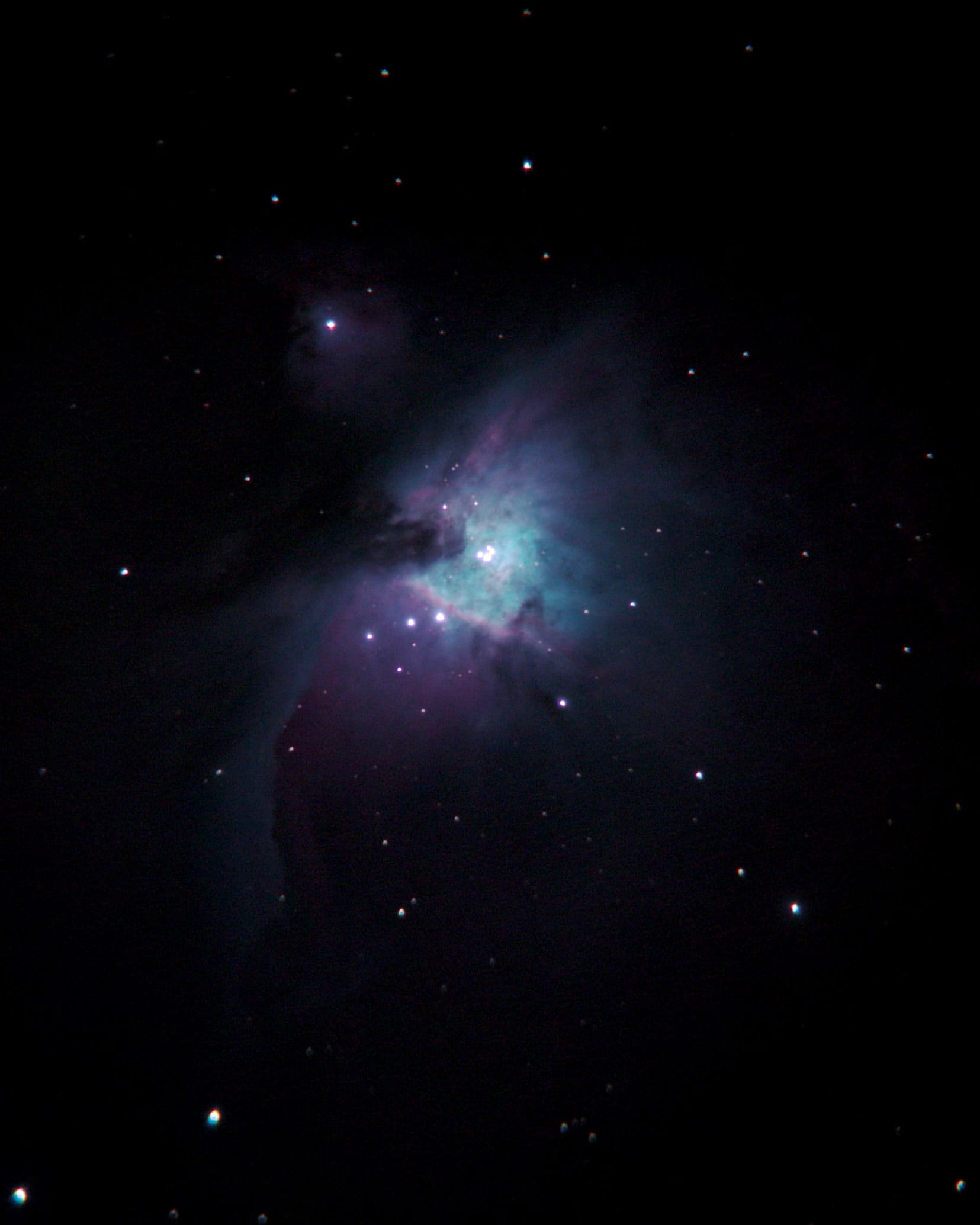
Orion Nebula (M42) — the same balcony, one year apart. The first image was taken with a phone through the telescope eyepiece. The second is a proper astrophotography setup, with roughly 20,000× more total exposure time.
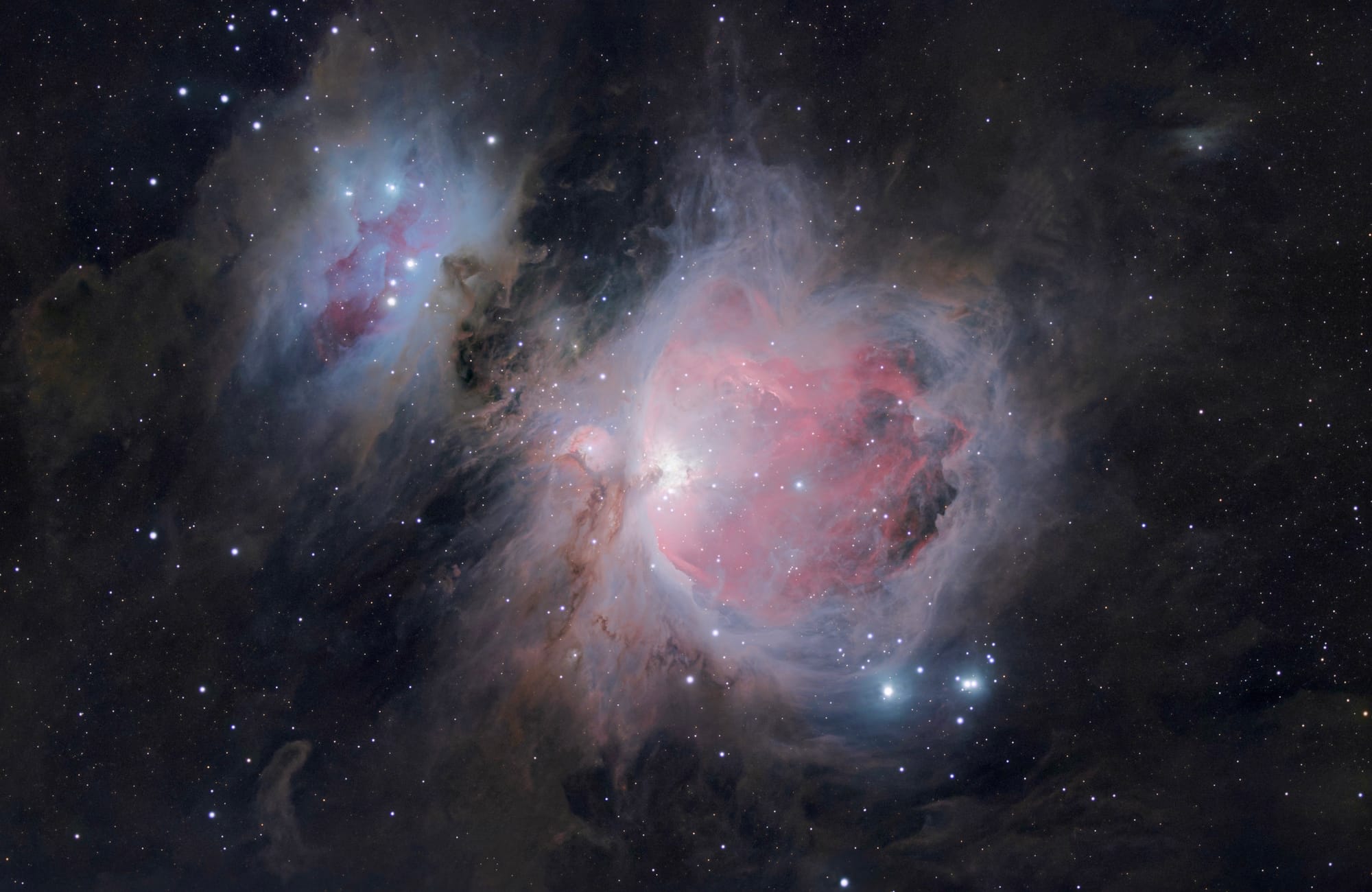
It’s easy to think of the Great Orion Nebula as a single object, but in reality it’s an entire scene. Right next to the core sits the small “button” of M43, and up to the left is NGC 1977 (the “Running Man”). Together they form a tricky mix of color and brightness that’s hard to pull out under city light pollution.
At the center is the Trapezium: four bright stars that make the frame’s dynamic range downright brutal. That’s why M42 is such a paradoxical target. It’s beautiful and accessible, often chosen as a first object — but “doing it well” means holding the whole image together: not blowing the core into a white patch, and not burying the faint outer layers in noise and gradients, especially from an urban sky.
| Camera | ZWO ASI2600MC |
| Optics | Askar 103 APO |
| Mount | UMi 17S |
| Gain | 0 |
| Sensor Temperature | –10 °C |
| F-ratio | f/5.6 |
| Exposure | 108 × 180 s |
| Total Integration | 5.4 h |
| Processing | Siril, GraXpert, Affinity |